Choosing among China’s top aluminum container manufacturers takes more than comparing prices or polished product photos. Buyers should examine alloy options, wall thickness, forming methods, sealing performance, and documented quality checks. A sample can reveal details a brochure misses: a rough rim, uneven coating, or lid that needs too much force. Small clues matter.
For a transparent expert perspective, this introduction uses an illustrative, original quotation—not a verified statement from a real person. Hypothetical packaging engineer Maya Chen puts the principle simply: “A dependable aluminum container begins with consistent material and careful process control.” That is a useful test, though not a substitute for supplier audits or product trials. A shortlist should also consider customization, minimum order quantities, lead times, communication, and after-sales support. Ask manufacturers for specifications and samples, then compare them against the intended use. Food-contact applications require particular attention to material documentation and suitability; confirm requirements with qualified professionals for the target market.
This guide will explore how manufacturers differ, what questions to ask, and which capabilities deserve closer inspection. It will not treat a ranking as proof of quality. Supplier information changes, and public claims can be incomplete. A strong factory may still be the wrong fit. That gap matters. Practical verification—not a sales promise—should shape the final decision.
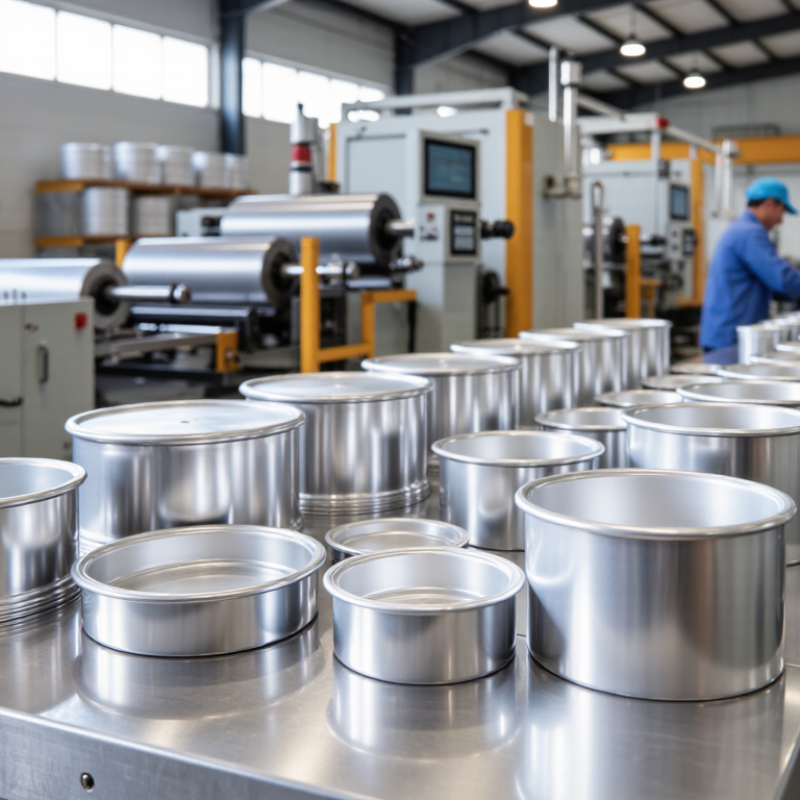
China’s aluminum container sector serves food, beverage, personal-care, and household-product supply chains. Factories range from high-volume lines to smaller converters handling specialized shapes. Production commonly involves sheet preparation, forming, trimming, cleaning, and surface finishing. Each stage affects wall thickness, rim quality, and closure fit. Small variations can cause leaks or slow filling.
Manufacturers compete on more than output. Buyers often assess material consistency, dimensional tolerances, coating quality, and delivery stability. A practical factory review should include sample measurements, inspection records, and a discussion of how defects are traced. Ask how scrap is separated and whether process changes are documented. The answers can reveal everyday controls better than a polished showroom. Details matter.
The industry benefits from established metal-processing capacity and broad supplier networks, but capabilities differ between plants. A container that looks sound may still dent during transport or fail at a particular filling temperature. Testing it with the intended product and closure is essential. Not always convenient. Buyers should confirm food-contact suitability and quality documents for their target market, rather than assuming one certificate applies everywhere. Public information can be uneven, and production claims deserve independent checking. Even a carefully prepared sample may not represent a full production run.
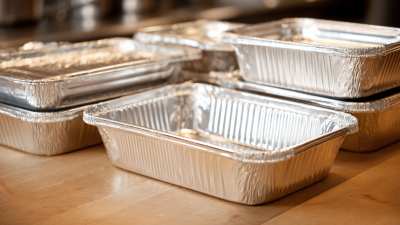
Aluminum containers made in China include foil food trays, beverage cans, rigid bottles, and small tins. Foil trays are lightweight and often formed with rolled rims for strength. They suit baked meals, prepared foods, and takeaway portions. Beverage cans use thin, shaped aluminum bodies with attached ends, while aluminum bottles have thicker walls and different neck designs. Small tins are commonly used for tea, confectionery, and personal-care products.
Small details matter.
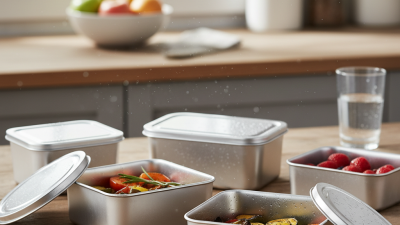
Manufacturing choices affect how a container performs. Buyers may compare material thickness, lid fit, surface finish, and resistance to dents. For food packaging, ask how the inside coating is checked and whether samples match production runs. A smooth rim can improve handling, but it does not prove the full container is reliable. I would avoid calling one type universally better; the contents, filling process, and shipping conditions all matter. One limitation in a simple comparison is that container names can vary between suppliers. Request drawings and filled samples, then inspect them under realistic storage and transport conditions.
China has a broad base of aluminum container manufacturers serving food, personal-care, and household-product markets. Their capabilities may include sheet cutting, deep drawing, trimming, surface finishing, and custom lid production. A supplier’s real strength is not a polished catalogue alone. Ask about alloy options, wall thickness, dimensional tolerances, and production capacity. Clear answers help buyers compare factories on practical terms.
When evaluating leading aluminum container manufacturers in China, review sample quality and inspection records. Check that rims feel even, lids fit without rocking, and surfaces show no sharp edges or visible dents. Ask how production batches are checked and how defects are recorded. Verify that material and product documents match the exact container being quoted. Small details matter. A strong sample does not guarantee every shipment will match it, so confirm the supplier’s process in writing.
Tips: Request samples in your intended size and finish, then test them with your filling and packing equipment. Compare several units, not just one. Discuss lead times, minimum order quantities, packaging, and acceptable tolerances before placing an order. Some specifications can be missed when conversations move quickly. Check them twice.
Annual production, 2020–2024 (million metric tons)
China’s expanding primary aluminum output provides background on the material supply base relevant to aluminum container manufacturing. Figures are rounded estimates; 2024 is an estimate.
Source: U.S. Geological Survey, Mineral Commodity Summaries 2025, Aluminum.
Reliable aluminum container production begins with controlled raw material and clear process records. Manufacturers should check alloy certificates, sheet thickness, surface condition, and coil identification before forming begins. Incoming inspections can catch scratches or uneven edges that may later weaken a rim. Press settings also need routine checks, since small changes in pressure can affect wall thickness and shape.
Small details matter. A clean forming die helps reduce dents, while scheduled tool checks can reveal wear before it causes repeated defects. Operators should inspect samples for dimensions, sharp edges, coating coverage, and consistent seams. A simple gauge and good lighting are useful; they do not replace trained judgment. Even a well-run line can miss a faint wrinkle or a defect hidden beneath a coating. That deserves honest attention, not a perfect-sounding claim. Quality teams can record test results, isolate questionable batches, and review recurring faults with production staff. Seal checks and load tests provide useful evidence, though sampling never proves that every container is identical. On a busy shift, the inspection notes should still identify the machine, time, and adjustment made.
When comparing Chinese aluminum container suppliers, look beyond catalog photos and quoted unit prices. Ask for the alloy, temper, wall-thickness range, and dimensional tolerances for the exact container you need. A rim that looks smooth in a picture may still vary between production runs. Request a sample and measure its height, opening, weight, and fit with your lid. Details matter.
Check how each supplier controls forming, trimming, cleaning, and any internal coating. Ask for inspection records, test methods, and the acceptance limits used for defects such as dents, burrs, or uneven rims. Verify certificates directly, including their scope and expiry date; a certificate alone does not prove consistent quality. Ask whether the sample came from ordinary production or was specially prepared. That distinction matters. Compare written quotations for tooling charges, minimum order quantities, packaging, lead times, and how changes are approved. Clear answers are useful, but vague promises about “strict quality” are not evidence. A spreadsheet helps, though it can hide real differences in process control. I would still confirm key details in writing before placing an order.
| Comparison Dimension | Information to Request | How to Compare Suppliers | Why It Matters |
|---|---|---|---|
| Product and material specification | Container type, dimensions, capacity, alloy and temper, material thickness, unit weight, rim design, and any coating or printing specification. | Compare quotations only after confirming that each supplier is pricing the same specification. Request a drawing and a production sample; do not rely on product photos alone. | Differences in gauge, dimensions, or unit weight can affect strength, fit, packing efficiency, and the true cost per usable container. |
| Food-contact suitability | Material declarations, coating details where applicable, and test reports or compliance documents relevant to the destination market and intended use. | Check that documents identify the actual product or material and are suitable for the intended food, temperature, and use conditions. Verify requirements for the target market rather than assuming one certificate applies everywhere. | Food-contact requirements vary by market and by product construction. A general certificate may not establish compliance for every container or use. |
| Quality management and inspection | Current quality-management certificates, inspection procedures, defect records, and a written inspection plan covering dimensions, appearance, and packaging. | Verify certificate validity and scope with the issuing organization where possible. Agree on acceptance criteria before production; ISO 2859-1 can be used as a reference for attribute-sampling plans when appropriate. | A documented inspection process helps make product quality more consistent and reduces disputes about acceptable defects. |
| Production capability and capacity | Relevant production equipment, monthly capacity for the specific container type, current utilization, and examples of comparable production runs. | Request capacity figures by product and confirm whether they include tooling, printing, and packing. Assess capacity against your forecast and required delivery schedule. | General factory capacity may not reflect the available capacity of the line or process needed for your order. |
| Tooling and customization | Tooling cost, lead time, maintenance terms, ownership, storage arrangements, and charges for design changes or replacement. | Get these terms in writing and confirm whether the quoted tooling is dedicated to your project. Check that drawings and sample approval are included in the development process. | Clear tooling terms help prevent unexpected costs and clarify control of custom molds or dies. |
| Minimum order quantity and price basis | Minimum order quantity by size or SKU, unit price, tooling or setup charges, packaging charges, and quotation validity. | Compare total landed-cost inputs, not unit price alone. Make sure every quote uses the same specification, order quantity, packaging, currency, and Incoterms® rule and named place. | Different order assumptions and delivery terms can make apparently similar unit prices incomparable. |
| Lead time and delivery reliability | Sample lead time, production lead time, shipping preparation time, and the event that starts the production clock, such as deposit receipt or artwork approval. | Ask for a written schedule with separate milestones for sample approval, production, inspection, and dispatch. Review delivery history for comparable orders if available. | Clearly defined lead-time milestones make it easier to plan inventory and identify schedule risk. |
| Packaging and export readiness | Units per carton, carton dimensions and gross weight, pallet configuration, moisture protection, shipping marks, and export-document support. | Request carton and pallet specifications before booking freight. Confirm that packaging protects the containers from crushing, contamination, and moisture during transport. | Packaging affects freight cost, warehouse handling, and the condition of goods on arrival. |
| Sampling and pre-shipment control | Pre-production sample, approved reference sample, inspection options, test methods, and the process for handling nonconforming goods. | Agree on sample approval and inspection criteria before placing the production order. For independent inspection, define the inspection scope, timing, and acceptance rules in advance. | Written acceptance criteria reduce ambiguity when evaluating bulk production. |
| Communication and after-sales support | Named sales and quality contacts, response process, document turnaround, complaint handling, and corrective-action procedure. | Evaluate how clearly the supplier answers technical questions and whether commitments are recorded in the quotation, specification, or purchase order. | Responsive communication is especially useful when resolving specification, production, or shipment issues across time zones. |