
How to Choose a Top China Silver Foil Supplier?
Choosing a top China silver foil supplier requires more than comparing prices or viewing polished factory photographs. Silver foil can look flawless under showroom lighting, yet reveal pinholes, uneven thickness, or surface stains during production. A dependable evaluation begins with measurable details, including silver purity, foil thickness, width tolerance, tensile performance, and surface cleanliness. Ask for recent inspection records, material certificates, and traceable batch numbers.
Dr. Chris Corti, a respected precious-metals specialist, has emphasized, “Quality must be measured, not assumed.” This principle fits silver foil purchasing closely. A serious supplier should explain its refining process, rolling equipment, annealing controls, and final inspection methods. It should also provide samples from current production, not only attractive samples prepared for sales meetings. Check the foil under magnification. Test its flexibility. Record the results.
Factory experience matters. So does honest communication. Confirm minimum order quantities, production capacity, packaging design, shipping protection, and realistic lead times. A strong supplier will discuss possible defects before signing an agreement. That conversation may feel uncomfortable. It is useful.
Do not depend on one certificate alone. Visit the facility when possible, or arrange an independent factory audit. Compare laboratory data with the delivered silver foil. Check whether the supplier maintains stable quality across several orders, not just one successful shipment. No supplier is perfect, and my own judgment can be incomplete. Still, a transparent manufacturer with controlled processes, responsive engineers, and verifiable records usually offers greater long-term value than the lowest quotation. Reliability is built through evidence, repeated delivery, and careful questioning.
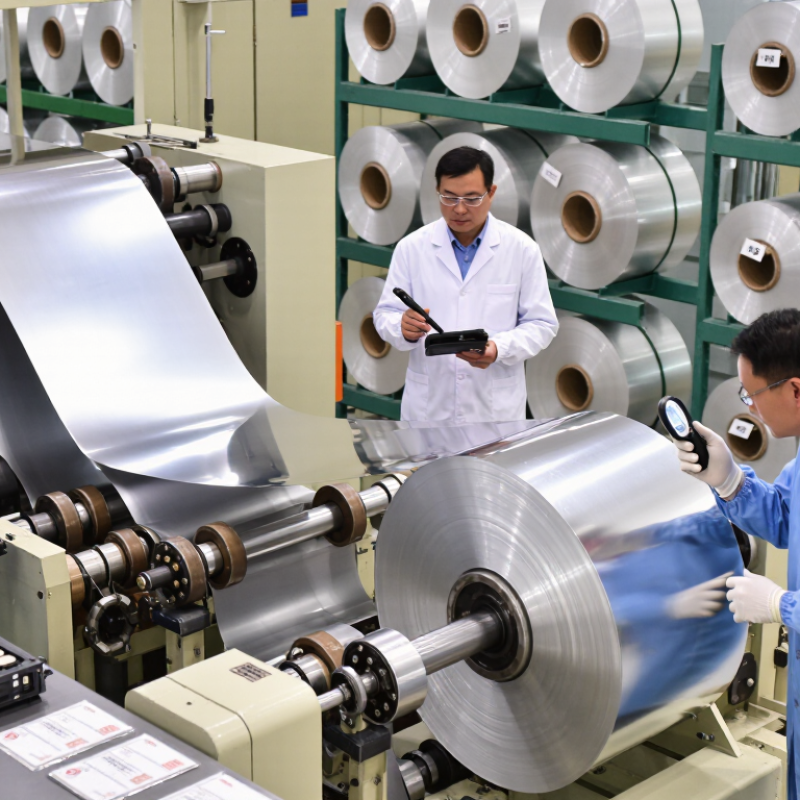
Define Requirements: 99.9%–99.99% Silver, 5–100 μm Thickness, and Width
A reliable China silver foil supplier should begin with your exact specification, not a generic product list. Define silver purity as 99.9% or 99.99%, then state the required thickness between 5 and 100 μm. A 5 μm foil behaves differently from a 50 μm foil during slitting, winding, and installation. Specify width, width tolerance, roll length, core size, surface finish, and edge condition. Burrs can damage delicate electrical contacts.
Market data also supports careful sourcing. The Silver Institute’s World Silver Survey 2024 reported industrial silver demand of 654.4 million ounces in 2023, a record level at that time. The U.S. Geological Survey estimated global silver mine production at about 25,000 metric tons in 2023. These figures indicate strong industrial consumption, but they do not prove a supplier’s material quality. A quotation alone is weak evidence.
Ask for a recent certificate of analysis showing silver content, impurities, thickness mapping, and width measurement results. Independent ICP-OES testing can verify purity, especially when the difference between 99.9% and 99.99% affects performance. Request samples from the actual production line. Measure them at several roll positions, not only at the center. Also inspect pinholes, wrinkles, oxidation, and edge straightness. One practical concern remains: “uniform thickness” may mean different tolerances to different suppliers. Put the numerical tolerance in the purchase specification.
How to Choose a Top China Silver Foil Supplier? - Define Requirements: 99.9%–99.99% Silver, 5–100 μm Thickness, and Width
| Evaluation Dimension | Defined Requirement | Recommended Acceptance Target | How to Verify | Why It Matters |
|---|---|---|---|---|
| Silver purity | 99.9%–99.99% Ag | Ag ≥ 99.90% for standard industrial use; Ag ≥ 99.99% for high-purity applications | Review the material certificate and confirm composition using XRF or an agreed laboratory test method | Purity affects electrical conductivity, corrosion behavior, solderability, and process consistency |
| Thickness range | 5–100 μm | Specify a nominal value, such as 10, 25, 50, or 100 μm, with a written tolerance | Measure at multiple points across the coil or sheet using a calibrated micrometer or suitable thickness gauge | Thickness controls electrical resistance, weight, flexibility, and material consumption |
| Thickness tolerance | Tolerance must be agreed for each nominal thickness | Use a documented tolerance, for example ±5% where the application permits; tighter tolerances require technical confirmation | Request a dimensional inspection report showing minimum, maximum, and average readings | Consistent thickness improves forming, laminating, coating, and electrical performance |
| Foil width | Width to be specified according to the production line and finished-part design | Common order formats include narrow slit rolls, master rolls, or cut sheets; confirm the exact width in millimeters | Check width at several locations and confirm edge condition, slit quality, and winding alignment | Correct width reduces trimming waste and prevents feeding or alignment problems |
| Width tolerance | Tolerance based on the cutting and assembly process | Define the permitted deviation in millimeters before quotation and sampling | Compare the inspection report with the purchase specification and approved sample | Controls yield, fit, and the repeatability of downstream processing |
| Temper and flexibility | Specify soft, half-hard, or hard temper where applicable | Temper should match bending, stamping, wrapping, or lamination requirements | Evaluate a production sample for bending, forming, surface cracking, and springback | Mechanical condition affects handling, forming quality, and resistance to tearing |
| Surface condition | Clean, uniform surface without visible oil, oxidation, pinholes, folds, or scratches | Define acceptable cosmetic limits and critical defects before mass production | Perform visual inspection under consistent lighting and inspect sample sections at suitable magnification | Surface defects may reduce bonding, conductivity, appearance, or service life |
| Electrical performance | Electrical requirements should be linked to purity and thickness | Agree on conductivity or resistance requirements when the foil is used in electrical components | Use a calibrated four-point probe or another mutually agreed test method | Confirms that the delivered foil performs consistently in the intended circuit or contact |
| Roll or sheet format | Select coil, slit roll, or sheet according to the production method | Confirm core diameter, outer diameter, roll weight, sheet length, and packaging method | Check the packing list, product labels, dimensions, and actual net weight | Correct format improves line compatibility and simplifies inventory control |
| Traceability and documentation | Each shipment should be traceable to a production batch | Require a batch number, certificate of analysis, inspection record, and packing list | Match batch information on the documents, labels, samples, and shipping cartons | Supports quality investigations, incoming inspection, and repeat purchasing |
| Sample and pre-shipment approval | Sample must represent the proposed production specification | Approve purity, thickness, width, temper, surface, roll format, and packaging before bulk order | Record test results and retain an approved reference sample | Reduces the risk of receiving material that differs from the quotation sample |
| Packaging and corrosion protection | Packaging must protect thin foil from moisture, crushing, contamination, and edge damage | Use moisture-resistant inner packaging, suitable cushioning, and clear external identification | Inspect packaging integrity and foil condition immediately after arrival | Proper packaging preserves surface quality and prevents handling damage during transport |
Related Posts
-

Top 10 Silver Foil Uses for Creative Packaging Solutions?
-

How to Use Silver Foil Paper for Stunning Crafts?
-

2026 Top Silver Foil Trends for Global Buyers to Know
-
Who Are Chinas Top Industrial Aluminum Foil Suppliers?
-

What is a foil container and how to choose the best one?
-

2025 Top 10 Aluminium Containers You Need for Your Kitchen Inventory