Top 10 Aluminium Packaging Manufacturers in China?

China’s aluminium packaging industry is no longer defined only by production scale. It now combines lightweight design, barrier performance, automated forming, and increasingly visible sustainability targets. This article introduces ten Chinese manufacturers worth examining across cans, foil containers, aerosol packaging, tubes, and customized aluminium solutions.

The International Aluminium Institute reports that recycling aluminium requires roughly 5% of the energy needed for primary production. That difference matters when packaging buyers evaluate carbon reduction, material recovery, and long-term supply security. The Institute also notes that most aluminium ever produced remains in productive use, supporting aluminium’s circularity potential. However, recycling performance depends on collection systems, sorting quality, coatings, and regional infrastructure. The material alone cannot solve every packaging problem.

Smithers’ packaging industry research identifies continued demand for lightweight formats, convenience packaging, and higher-value sustainable materials. China remains important because its manufacturers serve domestic brands and export markets with high-volume equipment and flexible customization. Factory details matter here: clean forming lines, controlled foil thickness, accurate neck dimensions, and consistent lacquer coverage can influence filling efficiency and product safety.

This list does not treat company size as the only measure. It considers manufacturing experience, certifications, product range, export capability, quality control, and evidence of responsible production. Public information is uneven, and some supplier claims deserve closer verification. No ranking is flawless. That is worth questioning. Buyers should still request audits, samples, test reports, traceability records, and current production references before selecting an aluminium packaging partner.
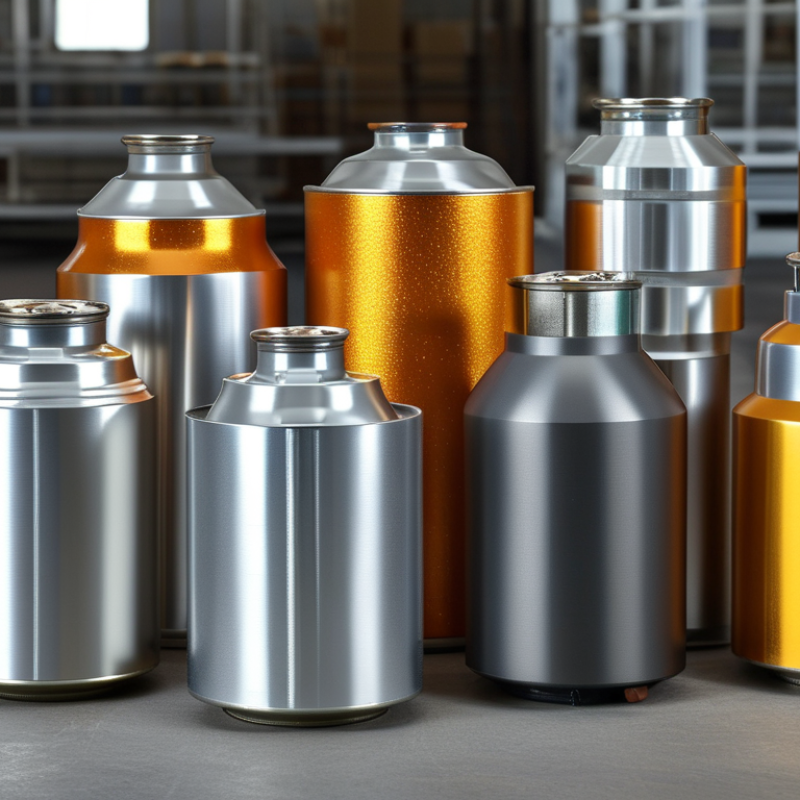
Top 10 Aluminium Packaging Manufacturers in China?

What Defines an Aluminium Packaging Manufacturer?

An aluminium packaging manufacturer does more than press metal into attractive shapes. It controls the full production chain, from alloy selection and coil inspection to forming, finishing, and final packing. Experienced teams understand how aluminium thickness affects strength, weight, sealing, and transport performance. They also adjust tooling for different formats, such as containers, tubes, closures, and protective sleeves.

Reliable manufacturers provide clear material certificates and batch traceability. Their quality staff measure dimensions, wall thickness, coating adhesion, surface defects, and seal performance. Practical testing matters. A package may look perfect but fail after repeated handling or temperature changes. Good facilities use calibrated instruments and documented inspection plans. They also maintain clean production areas when packaging will contact food, cosmetics, or medicines. Compliance must be demonstrated through suitable records, not vague promises.

Manufacturing experience still has limits. No factory is perfect. I have seen minor scratches appear after automated handling, even when earlier samples looked excellent. Strong suppliers investigate the cause and improve the process instead of hiding the defect. They should discuss recycled content, energy use, waste recovery, and realistic delivery capacity. Communication is another important measure. Engineers who explain tolerances clearly can prevent expensive redesigns. A dependable aluminium packaging manufacturer combines technical control, honest reporting, responsive service, and evidence that its products perform in real working conditions.

Criteria for Ranking China’s Leading Aluminium Packaging Companies

Top 10 Aluminium Packaging Manufacturers in China?

Ranking China’s leading aluminium packaging companies requires more than factory size or export volume. A credible review begins with verifiable production experience. We examine years in operation, monthly capacity, tooling capability, and evidence from repeat industrial buyers. Factory visits matter. Production floors reveal more than polished brochures.

Technical performance carries greater weight than marketing language. The assessment checks alloy consistency, thickness tolerance, forming accuracy, sealing performance, and surface finish. Samples should survive drop tests, compression checks, and controlled temperature changes. We also review quality systems, batch records, inspection equipment, and corrective-action procedures. Certifications help, but certificates alone do not prove daily discipline.

Reliable suppliers communicate clearly when specifications change. They disclose lead times, minimum order quantities, testing limits, and material sources. Strong companies provide traceability from coil receipt to packed shipment. Environmental evidence also matters, including scrap recovery, energy monitoring, and responsible wastewater controls. Customer service is tested through response speed and problem ownership, not friendly promises.

The scoring should balance quality, reliability, customization, compliance, and total cost. A lower quotation can hide expensive tooling, unstable dimensions, or frequent delays. Rankings remain imperfect because public data is uneven and customer needs differ. One manufacturer may excel at lightweight containers, while another handles demanding closures better. That distinction deserves attention.

Top 10 Aluminium Packaging Manufacturers in China

China’s top 10 aluminium packaging manufacturers are best evaluated through evidence, not marketing claims. Key measures include annual capacity, forming precision, export experience, and quality-system maturity. Grand View Research estimates the global aluminium cans market exceeded US$55 billion in 2023. It also forecasts steady growth through 2030, supported by beverage, food, and personal-care demand.

A credible Chinese supplier should provide batch traceability, inspection records, and recent audit results. ISO 9001 and ISO 14001 certifications are useful, but certificates alone prove little. Buyers should inspect can-wall thickness, coating adhesion, seam performance, and leakage rates.

The International Aluminium Institute reports that recycled aluminium requires only about 5% of the energy used for primary aluminium production. Therefore, recycled-content control deserves attention during supplier selection.

The strongest ten manufacturers usually combine automated forming lines with in-house tooling and laboratory testing. They can manage small tolerances, high-speed filling, and customized printing requirements. However, public capacity figures are not always comparable. Some factories report installed capacity, while others disclose actual output. That distinction matters.

I would also question unusually low quotations, because thinner material or weaker inspection can create hidden costs. Factory visits, sample testing, and verified customer references remain more reliable than polished rankings. Some suppliers may appear less impressive online, yet perform better during production trials.

Products, Technologies, and Production Capabilities

China’s top ten aluminium packaging manufacturers should be judged by capability, not brochure size. Products commonly include beverage cans, foil containers, collapsible tubes, closures, and pharmaceutical packs. The National Bureau of Statistics reported China’s primary aluminium output at about 41.6 million tonnes in 2023. This supply base supports large, responsive packaging operations.

Production technology separates stronger suppliers. Look for high-speed drawing and ironing lines, precision impact extrusion, automated coating, and inline vision inspection. Modern plants can control wall thickness within tight tolerances, reducing leakage and material waste. Digital production systems also track batch numbers, furnace conditions, coating weight, and seal integrity. The International Aluminium Institute recorded global primary aluminium production near 70.6 million tonnes in 2023, with China representing roughly 59 percent. Scale is evident.

But scale is not everything. A credible top-ten assessment should examine annual capacity, die-change speed, recycled content, tooling depth, and export quality records. The International Aluminium Institute’s recycling research highlights aluminium’s strong recovery value, yet factory disclosures remain uneven. That weakens direct comparisons. Some manufacturers publish impressive output figures but provide little evidence on scrap rates or rejected units. Buyers should request sample cans, cross-section tests, coating migration documents, and recent audit results. Small details matter. A shiny surface can hide poor forming control.

How to Select the Right Aluminium Packaging Supplier

Choosing among China’s top aluminium packaging manufacturers requires more than comparing prices. A reliable supplier should explain alloy grades, wall thickness, forming methods, and surface finishes clearly. Ask for recent production samples, not only catalogue photographs. Check whether the sample has even seams, clean edges, accurate dimensions, and consistent color. Small defects often become expensive during large-scale filling and transport.

Supplier verification should include factory audits, quality records, and production capacity. Request evidence of material traceability and testing procedures. Depending on your market, confirm suitable food-contact, recycling, and packaging compliance documents. A responsive engineer is also valuable. They can identify risks in tooling, closures, printing, and stacking before production begins. However, certificates alone are not enough. A polished document may hide weak process control. I have seen buyers overlook communication delays because the quotation looked attractive.

Tips: Send a detailed specification sheet with drawings, tolerances, volume forecasts, and delivery targets. Compare at least three suppliers using the same requirements. Test samples under realistic conditions, including vibration, temperature changes, and repeated opening. Ask who owns the mould and how revisions are approved. Clarify payment stages, inspection points, and procedures for handling defective units. Do not choose the lowest offer automatically. A slightly higher price may provide stronger consistency, faster problem-solving, and fewer production interruptions. Perfect suppliers do not exist; your evaluation process must still be practical and documented.

Top 10 Aluminium Packaging Manufacturers in China? - How to Select the Right Aluminium Packaging Supplier

Anonymous supplier comparison based on commonly used aluminium packaging specifications, production capabilities, quality systems, and export requirements. Always request current certificates, samples, audit records, and a formal quotation before placing an order.
Rank Anonymous Manufacturer Profile Main Packaging Formats Common Aluminium Materials Typical Product Range Typical MOQ Typical Lead Time Quality & Compliance Checks Best-Fit Buyer
01 Large integrated aluminium packaging plant Cans, bottles, tubes, closures, trays AA1100, AA3003, AA3104, AA8011 Standard and custom industrial-scale packaging 50,000–100,000 units per SKU 30–60 days after artwork approval ISO 9001, incoming material inspection, dimensional checks, leak testing Major importers and established consumer brands
02 High-speed aerosol packaging specialist Aerosol cans, spray containers, protective caps Impact-extruded aluminium, commonly AA1050 or AA1070 Personal care, household, technical aerosol containers 30,000–80,000 units per size 35–55 days Wall-thickness measurement, pressure testing, coating adhesion, valve-fit checks Aerosol fillers and personal-care manufacturers
03 Flexible aluminium foil converter Foil laminates, sachets, lids, pharmaceutical packs AA8011 and AA1235 foil grades Food, pharmaceutical, cosmetic, and household packaging 500–2,000 kg per artwork or structure 20–40 days Pinholes, tensile strength, seal strength, bond strength, migration documentation Food and pharmaceutical packaging converters
04 Aluminium tube and laminate tube manufacturer Collapsible tubes, laminate tubes, nozzles, caps AA1050, AA1070, aluminium-polymer laminate structures Toothpaste, cosmetics, pharmaceuticals, adhesives 20,000–50,000 units per design 30–50 days Closure torque, tube crimping, internal lacquer, burst and leakage tests Cosmetic, healthcare, and personal-care companies
05 Food tray and foil container producer Takeaway trays, bakery pans, meal containers, lids AA3003, AA8011, food-contact aluminium foil Standard disposable and recyclable foodservice formats 10,000–50,000 pieces per size 15–35 days Food-contact declaration, gauge control, edge inspection, stacking tests Caterers, food processors, wholesalers, and retailers
06 Premium aluminium bottle and flask producer Water bottles, beverage containers, cosmetic bottles, flasks Deep-drawing grades such as AA3003 and AA5052 Reusable, printed, anodized, and coated containers 5,000–20,000 units per design 25–45 days Drop testing, coating adhesion, torque testing, internal coating inspection Promotional, outdoor, beverage, and cosmetic brands
07 Pharmaceutical aluminium packaging supplier Blister foil, strip foil, vial seals, sachets AA8011, AA1235, coated pharmaceutical foil Primary and secondary pharmaceutical packaging 1,000–3,000 kg per specification 30–60 days GMP-related controls, cleanliness, pinhole testing, coating and print verification Pharmaceutical manufacturers and contract packers
08 Custom printed aluminium packaging factory Printed tins, cans, lids, promotional containers AA1050, AA3003, AA5052, tinplate-aluminium combinations Short-run and medium-run customized packaging 3,000–15,000 units per design 25–45 days, including tooling Color approval, artwork proofing, abrasion testing, dimensional inspection Start-ups, promotional campaigns, and seasonal products
09 Cosmetic aluminium packaging specialist Jars, tins, cream containers, perfume components AA1050, AA1070, AA3003 Anodized, lacquered, embossed, and screen-printed containers 5,000–25,000 units per SKU 25–50 days Surface finish, color consistency, closure fit, coating and corrosion checks Beauty, skincare, fragrance, and wellness companies
10 Flexible, low-MOQ aluminium packaging supplier Pouches, sachets, refill bags, sample packs AA8011 and AA1235 laminated foil structures Customized small-batch food, pet-care, and personal-care packaging 10,000–30,000 pieces per design 20–40 days Seal integrity, burst testing, print registration, laminate bond inspection Emerging brands, e-commerce sellers, and pilot projects
Material Verification
Confirm the aluminium alloy, temper, thickness tolerance, surface treatment, and food- or pharmaceutical-contact suitability.
Supplier Audit
Review production equipment, quality-control records, traceability procedures, capacity, tooling ownership, and corrective-action history.
Commercial Comparison
Compare total landed cost, tooling fees, packaging requirements, payment terms, export documentation, lead time, and after-sales support.