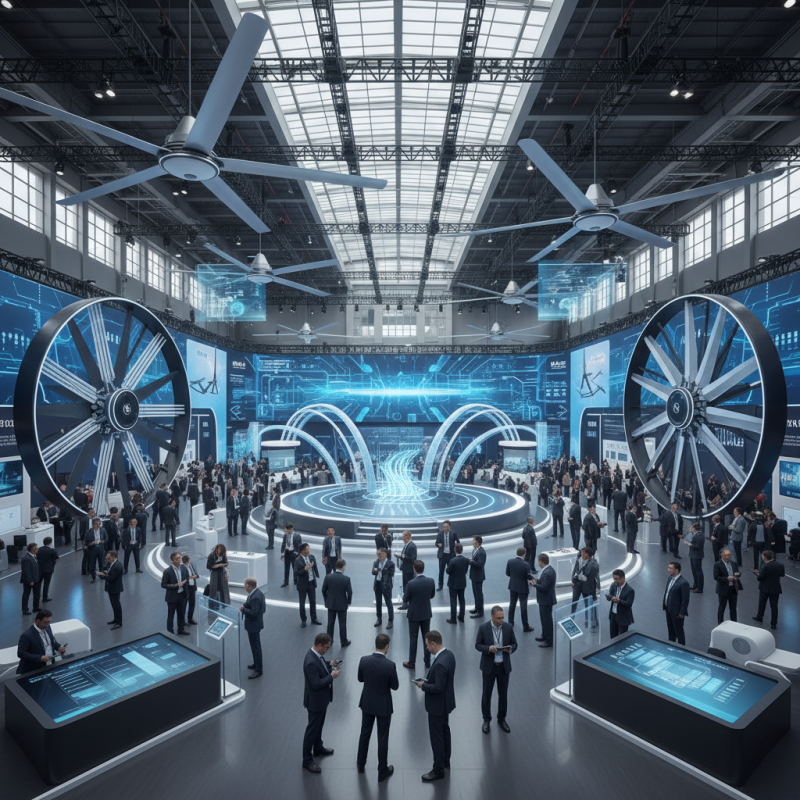
How to Choose Big HVLS Fans at 2026 Canton Fair?
Choosing the right Big Hvls Fan is crucial for efficiency and comfort in large spaces. At the 2026 Canton Fair, vendors will showcase the latest technology and designs. This event offers an opportunity to explore innovations that improve energy savings and airflow management.
According to recent industry reports, the demand for HVLS fans is projected to grow significantly. An increase of approximately 8% per year is expected as businesses seek sustainable solutions. These fans provide effective cooling, making them essential in warehouses and large retail spaces.
The integration of AI at the Canton Fair is noteworthy. It enhances the buyer experience. Navigating a massive 1.55 million square meters can be challenging. However, AI-driven search capabilities allow buyers to find suppliers with certifications like ISO and CE. This ensures quality and compliance, but the need for thorough vetting remains critical.
Understanding the Importance of HVLS Fans in Large Spaces
HVLS fans play a crucial role in large spaces. These fans can provide comfort in warehouses, gyms, and industrial facilities. They circulate large volumes of air, reducing humidity and heat. This leads to a more pleasant environment. Proper air circulation increases productivity and workforce satisfaction. In high-traffic areas, effective ventilation is essential.
Choosing the right HVLS fan is not straightforward. Consider the size of your space. A fan that is too small won't be effective. A fan that is too big may be overwhelming or cause discomfort. You need to balance airflow and noise. Look at the design. Some fans may clash with your facility’s aesthetics.
Energy efficiency is also important. Many HVLS fans consume less power than traditional fans. However, not all models are created equal. Inspecting specifications helps in making an informed choice. Don't forget about maintenance needs. Overlooking this can lead to poor performance. Reflect on your specific requirements before making a decision.
How to Choose Big HVLS Fans at 2026 Canton Fair? - Understanding the Importance of HVLS Fans in Large Spaces
| Dimension | Value | Importance |
| Fan Size (Diameter) | 8 - 24 ft | Larger diameter covers more space effectively. |
| Airflow Rate | 20,000 - 80,000 CFM | Higher airflow improves comfort and energy efficiency. |
| Energy Consumption | 300 - 1,200 Watts | Lower energy usage translates to cost savings. |
| Noise Level | Under 50 dBA | Quieter fans create a more pleasant environment. |
| Mounting Type | Ceiling or Wall-Mounted | Proper mounting ensures optimal airflow distribution. |
| Material | Aluminum or Galvanized Steel | Durable materials prolong fan life. |
Key Factors to Consider When Choosing HVLS Fans
When selecting big HVLS fans at the 2026 Canton Fair, consider various key factors. One vital point is the fan size. Large spaces often need fans with diameters ranging from 8 to 24 feet. A study indicates that properly sized HVLS fans can reduce energy costs by up to 30%. This efficiency is crucial in commercial spaces where overhead costs significantly accumulate.
Another factor is airflow distribution. Look for fans that provide a uniform air movement. Reports show that uniform airflow can enhance thermal comfort levels by 5 to 10 degrees. This can drastically improve productivity in workplaces. Additionally, consider the fan's energy consumption. Energy-efficient models may have a higher upfront cost, but they typically pay off over time.
Noise levels also matter. Some fans operate silently, while others can be disruptive. A fan's decibel level should be part of your evaluation. Keep in mind that ideal fans produce minimal noise while maximizing airflow. Yet, not all fans meet this standard. Some may seem effective but create more sound than comfort. Balancing these factors is essential for making the right choice.
Comparative Analysis of Energy Efficiency and Performance Ratings
When choosing big HVLS fans at the 2026 Canton Fair, energy efficiency and performance ratings are crucial. The best fans consume less energy while providing optimal airflow. Look for models with high airflow efficiency ratios. These ratios help compare fan performance. Pay careful attention to the fan's designs, such as blade shape and motor type. These factors can affect energy usage significantly.
Consider how the environment impacts fan performance. In larger spaces, airflow patterns differ. An inefficient fan might create dead zones or turbulence. It's important to analyze the specifications in relation to your intended use. Sometimes, a fan that seems powerful is not the most energy-efficient model.
Take time to examine user reviews and expert opinions. Personal experiences can reveal insights that ratings alone may not indicate. The balance between performance and efficiency requires critical thinking and careful evaluation.
Industry Standards and Certification for HVLS Fans
When attending the 2026 Canton Fair, understanding industry standards and certifications for HVLS (High-Volume, Low-Speed) fans is crucial. These fans must comply with specific regulations to ensure safety and efficiency. Look for certifications like CE, UL, and ISO. These signify that the fans meet rigorous testing and safety guidelines. Purchasing from certified manufacturers can help you avoid potential issues.
Quality can vary widely among different HVLS fans. Pay attention to their construction and materials. Some fans may lack durability or energy efficiency. Inspecting performance data can also reveal how effective they are in large spaces. Don't just rely on sales pitches; ask for real-world performance statistics to gauge reliability.
Remember that installation also plays a role in fan performance. Improper setup can lead to inefficiencies. Ask about installation support from the manufacturer. Even minor mistakes can lead to airflow problems. Evaluate the entire package, from certification to installation, to make an informed decision.
Future Trends in HVLS Fan Technology at the 2026 Canton Fair
As the 2026 Canton Fair approaches, trends in HVLS (High Volume Low Speed) fan technology are evolving rapidly. Energy efficiency is increasingly becoming a priority. More manufacturers are focusing on designing fans that use less power while maintaining high airflow. This shift can help reduce operational costs for large spaces. The integration of smart technology is also on the rise. Fans can now be controlled via mobile apps or smart systems. This offers improved user convenience and adaptability.
However, not all advancements may be flawless. Some users report connectivity issues with smart fan features. The reliance on technology can sometimes be a double-edged sword. Furthermore, while energy-saving features are appealing, they may come at a higher initial investment. Buyers need to consider the long-term benefits versus the upfront costs. This decision could impact budget planning significantly.
Another emerging trend is the focus on aesthetic designs. HVLS fans are no longer just functional; they are becoming key design elements. Unique styles and finishes are being introduced. Yet, the challenge remains in balancing style and performance. Some designs may compromise airflow efficiency for visual appeal. As these trends unfold, it is essential to weigh functionality against personal preferences. The future of HVLS fans at the Canton Fair presents exciting opportunities and challenges.