
Choosing China’s best Water-Based Gel Coating Machine manufacturer requires more than comparing catalog prices. Equipment must match coating viscosity, substrate width, drying temperature, and production speed. A polished brochure cannot prove consistent performance.
Market research supports this demand. Grand View Research’s 2024 water-based coatings analysis reports continued growth through 2030, driven by lower-emission formulations and stricter environmental expectations. MarketsandMarkets also identifies packaging, construction, automotive, and industrial applications as important waterborne coating sectors. These reports describe broad market trends, not every gel-coating process. That difference matters.
A reliable manufacturer should demonstrate practical engineering experience. Ask for coating trials using your actual gel formula, film thickness, and substrate. Watch the machine operate. Check whether the pump maintains stable pressure during continuous production. Inspect stainless-steel contact parts, nozzle design, temperature control, cleaning access, and emergency protection. Small details become expensive problems later.
Speed is not everything.
A suitable Water-Based Gel Coating Machine should provide repeatable coverage, low material waste, and simple maintenance. Technical documents should include tolerances, electrical standards, installation requirements, and after-sales response times. ISO 9001 certification can support quality control, but it cannot replace an on-site audit or sample testing.
Some supplier claims may be incomplete. Even this evaluation has limits without production data. Buyers should compare test records, customer references, warranty terms, and spare-parts availability. The strongest Chinese manufacturer is not necessarily the largest one. It is the partner that understands your formulation and proves stable results under real factory conditions.
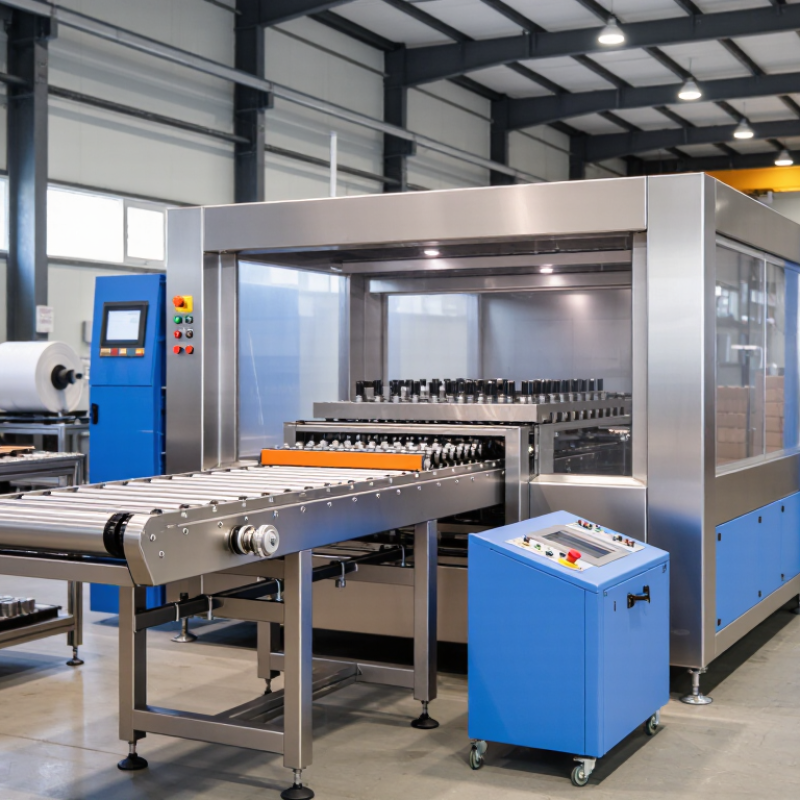
Operators adjust coating thickness, conveyor speed, gel temperature, and drying airflow. The pump must deliver a steady flow. The coating head then spreads the gel evenly across the moving surface. Small changes can cause visible defects. A slight viscosity shift may create streaks, pinholes, or uneven edges. Practical testing is essential because each gel formulation behaves differently.
A dependable machine should provide accessible controls, washable contact parts, guarded moving components, and repeatable settings. Cleaning matters more than many operators expect. Residue around the coating head can quickly affect surface quality. Humid conditions may slow drying, while excessive airflow can disturb the wet layer. These limitations deserve attention. Regular calibration, sample inspection, and clear production records help reveal weak points before they become expensive defects.
A water-based gel coating machine applies a controlled gel layer onto film, paper, fabric, or other continuous substrates. The process usually begins in a stainless-steel mixing tank. Agitators disperse polymers, pigments, and additives while limiting foam. A filter removes particles before the metering pump sends the gel toward a slot die, knife coater, or precision roller.
The coating head controls wet thickness. Typical industrial settings may range from 20 to 200 microns, depending on viscosity and substrate speed. The coated web then enters several heated drying zones. Warm air removes water gradually, while airflow prevents surface skinning. Excessive heat can create bubbles or uneven shrinkage. Small details matter.
A useful reference is the Grand View Research Water-Based Coatings Market report, which estimated the global market at more than USD 75 billion in 2023. Smithers also identifies packaging and functional films as important growth areas for water-based coating use. These figures support continued investment in accurate coating equipment, but market growth does not guarantee stable production.
In real operation, gel temperature, pump pulsation, and edge alignment can change the final finish. Operators should check coating weight repeatedly, not only at startup.
A weak assumption is that water-based materials always dry easily. High humidity can slow evaporation, and poor ventilation may leave residual moisture.
Therefore, a reliable machine needs adjustable speed, temperature, tension, and airflow controls.
A reliable Chinese manufacturer should prove performance, not only display attractive factory photos. Check whether the machine maintains even coating thickness across different gel viscosities. Ask for trial videos using materials similar to yours. Important details include stainless steel contact parts, stable temperature control, adjustable roller pressure, and an easy-to-clean coating path. A responsive engineer should explain these choices clearly, without hiding behind technical language.
Production consistency matters as much as machine design. Request inspection records, component traceability, calibration procedures, and a realistic delivery schedule. A serious supplier can describe factory testing, installation support, operator training, and spare-part availability. They should also provide clear electrical documents and safety instructions for your market. A polished showroom is not proof. I have seen specifications look impressive while practical adjustment remained difficult. That gap deserves attention.
Tips: Compare samples, not promises. Ask for a live coating test. Measure thickness at several points. Check cleaning time. Clarify warranty limits in writing. Also, speak with the service engineer before ordering; sales communication may be excellent, but technical support can be slower. A dependable manufacturer welcomes detailed questions and admits where the machine has limitations. That honesty is often more valuable than exaggerated claims.
How to Compare Chinese Gel Coating Machine Suppliers?
Choosing a Chinese water-based gel coating machine requires more than comparing prices. MarketsandMarkets reported that the global composites market could reach about USD 171.6 billion by 2028. This growth increases demand for stable, repeatable coating equipment. Ask suppliers for coating-width tolerance, material viscosity ranges, transfer efficiency, and test results from comparable applications.
A practical factory trial reveals more than a sales brochure. Check whether the machine maintains an even film across the full mold width. Measure coating weight at several points, not only in the center. Confirm pump accuracy, nozzle cleaning time, curing compatibility, and spare-part availability. A useful target is less than 5% coating-weight variation, although the correct limit depends on the product. Some suppliers provide impressive samples but weak process documentation. That matters later.
Review quality systems carefully. The ISO Survey 2023 recorded more than 1.2 million ISO 9001 certificates worldwide, but certification alone does not prove machine performance. Request calibration records, material-contact specifications, electrical compliance documents, and a written acceptance protocol. Compare total ownership cost, including installation, training, downtime, and consumables. I would also question vague claims about “high precision.” Precision without a defined measurement method is nearly meaningless. One overlooked weakness remains common: remote troubleshooting may be slow when production stops. A clear response-time agreement is worth more than a slightly lower quotation.
This weighted evaluation framework assigns a total of 100 points to the main factors buyers should review: coating performance, dosing accuracy, curing compatibility, automation, compliance documentation, after-sales support, and delivery capability. Use the same criteria and evidence requirements for every supplier to create a consistent comparison.
Water-based gel coating machines serve industries that need smooth, protective surfaces with lower solvent emissions. Their main applications include fiberglass boats, bathroom units, wind-energy components, automotive panels, and architectural composite parts. The global composites market was valued at about USD 126 billion in 2023, according to Grand View Research. This expanding base creates demand for controlled coating equipment, especially in repeated molding operations.
In marine production, a machine can spray gel coat onto a mold before fiberglass reinforcement is added. Operators adjust pump pressure, nozzle size, and film thickness to reduce pinholes and uneven color. Sanitaryware manufacturers use similar systems for bathtubs, shower trays, and washbasins.
Construction producers apply coatings to facade panels and artificial-stone surfaces. A 2024 report from MarketsandMarkets projected the global water-based coatings market to grow at roughly 5% annually through the decade. That trend supports cleaner production areas, but it does not remove process challenges.
Surface preparation still matters. A poorly cleaned mold can ruin an otherwise accurate spray pattern. Water-based formulas may also require longer drying, depending on humidity and airflow. That part is easy to underestimate. In my experience, production teams should test viscosity at actual workshop temperature, not only in laboratory conditions. Medical, food-contact, and transport components may require documented adhesion, abrasion, and chemical-resistance testing. Machine selection should therefore match the resin system, mold size, daily output, and operator skill—not only the advertised spraying speed.
