Choosing a food paper supplier is not just a price comparison. The right partner must deliver consistent specifications, clear documentation, and dependable lead times. A sample may look sturdy on a desk, then soften beside a warm sandwich or leak beneath oily pastries. Small tests matter.
Packaging scholar Dr. Susan Selke’s research offers a useful buyer’s principle, paraphrased here: “Food packaging should protect the product while fitting the realities of production and distribution.” That balance guides this list of 10 suppliers for global buyers. It also explains why a catalogue alone is not enough.
Look closely at paper weight, grease resistance, moisture performance, print quality, and available food-contact documentation. Ask how specifications are controlled between batches. Check whether the supplier can provide samples, answer technical questions, and communicate clearly across time zones. These details can reveal more than a polished sales sheet.
Not every buyer needs the same solution. A bakery ordering custom-printed wraps has different priorities from a distributor sourcing standard paper bags by the pallet. Nor does a “sustainable” label settle every question; buyers should examine the material, supporting claims, and end-of-life options for their market. That part can be frustrating.
The suppliers below are presented as options to assess, not automatic endorsements. Confirm current product details directly, test materials with the foods and processes you use, and verify documentation before placing an order. A careful shortlist saves time. Sometimes, the best supplier is simply the one that answers plainly and delivers the same quality twice.
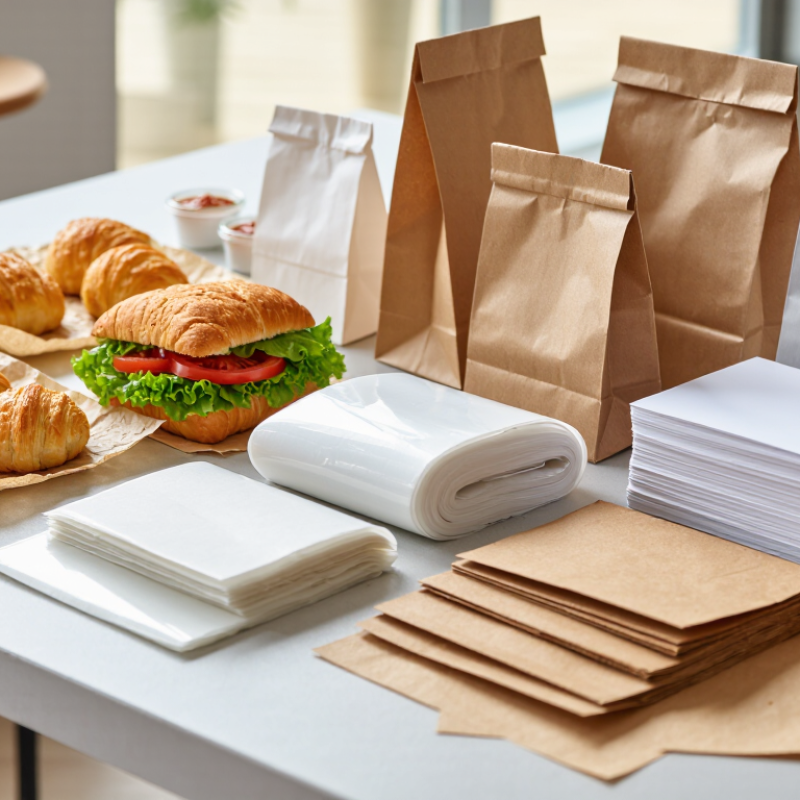
Food paper includes wraps, bakery sheets, paperboard cartons, cups, trays, and takeaway bags. Each format meets different needs. A pastry liner must resist grease; a chilled-food carton needs strength and moisture control. Buyers should check basis weight, barrier performance, sealing method, and food-contact documentation against the intended use. “Food grade” alone is not a complete specification. Details matter.
The scale of paper production provides useful context, but not a direct measure of food-packaging demand. The FAO’s Global Forest Products Facts and Figures 2022 reports about 401 million tonnes of global paper and paperboard production that year. This broad figure includes many non-food uses. Not all paper qualifies. Climate, transport distance, storage humidity, and local recycling systems can also affect supplier choices. A paper wrap that works well for dry bread may fail around a hot, oily meal. Buyers can request test results for real-use conditions, then compare samples before placing large orders. Data sheets help, but a brief kitchen trial often reveals awkward details.
Food-contact safety begins with the finished paper, not a generic certificate. Buyers should request declarations of compliance, migration-test results, and batch traceability for the intended food type, temperature, and contact time. Requirements differ by market. In the European Union, Regulation 1935/2004 sets the general framework for food-contact materials, while Regulation 2023/2006 covers good manufacturing practice. Ask how recycled fiber, coatings, inks, and adhesives are controlled. That distinction matters.
Quality checks should be practical and repeatable. Compare grammage, thickness, moisture, and grease or water resistance across production batches. Request test methods and acceptable tolerances, not just a pass certificate. Eurostat’s 2022 packaging-waste statistics put the EU recycling rate for paper and cardboard packaging at roughly 83%. Strong recovery rates are encouraging, but they do not prove that a specific sheet is safe for food contact. One detail can be missed: a coating may change both recyclability and performance.
For sustainability claims, verify chain-of-custody documentation and the origin of virgin fiber, then check whether local collection systems accept the finished material. Ask suppliers to explain rejected batches and corrective actions; imperfect records deserve follow-up, not assumptions. A polished audit file is useful, but it cannot replace independent testing, clear specifications, and periodic factory checks. Buyers should also review whether samples match mass-production stock, since small inconsistencies can matter in real use.
A food paper supplier should be assessed on more than price per ton. Request the paper’s technical data, including basis weight, thickness, grease resistance, and performance under heat or freezing. Ask which coatings, inks, and adhesives are used, and request current food-contact documentation for the intended application. Requirements can differ by destination and product type, so verify documents against local rules rather than assuming one certificate covers every market.
Request samples from the same grade and production process proposed for the order. Test them with your actual food, packaging equipment, and storage conditions. A sheet that resists oil on a desk may behave differently when wrapped around warm pastries. Small details matter. Check roll width, winding direction, core size, and packaging protection; moisture damage can complicate handling after a long shipment. Ask for batch traceability and a clear process for handling quality complaints.
International purchasing also depends on dependable communication. Confirm minimum order quantities, production lead times, export packing, and which shipping terms are included in each quotation. Ask how delays or specification changes are reported, and request references that reflect similar products or shipping routes. A polished document is useful, but it is not proof of consistent production. I would still leave room for doubt until samples and records align; paperwork can look tidy while practical details remain unclear.
Suggested evaluation priorities for comparing food paper suppliers. The points are a buyer-planning framework, not measured market statistics; adjust them to your product and destination-market requirements.
Prioritize food-contact compliance and barrier performance, then verify consistent quality, traceability, production capacity, export documentation, lead time, and transparent pricing. Confirm applicable requirements with the relevant authorities in each destination market.
Choosing among ten leading food-paper suppliers means looking beyond polished product sheets. Their profiles differ in scale, fiber sourcing, coating options, and technical support. FAOSTAT recorded roughly 400 million tonnes of global paper and paperboard production in 2022, showing the breadth of the supply base. Yet volume alone says little about whether a mill can deliver grease-resistant wraps, cupstock, or stable food-grade board.
The supplier profiles span major manufacturing regions and highlight practical differences: some focus on high-volume folding carton board, while others offer lightweight papers for bakery bags and takeaway wraps. Ask for current food-contact documentation, migration test results, and details on recycled or virgin fiber content. Eurostat reported an 83.2% recycling rate for paper and cardboard packaging waste in the European Union in 2022. That figure reflects regional recovery systems, not a guarantee that every paper product is recyclable in every market. Small detail, big difference.
A useful comparison also checks grammage consistency, moisture performance, printability, minimum order quantities, and lead times. Request sample rolls or sheets, then test them under real filling and sealing conditions. A paper that feels sturdy on a desk may soften beside hot food. Supplier claims deserve verification; even a well-prepared profile cannot replace hands-on trials.
Comparison of ten common food-paper supplier capability profiles. These are supplier types, not named companies or a verified ranking. Product availability and compliance depend on the specific supplier, paper grade, coating, and intended use; confirm details with the supplier before purchasing.
| Profile | Supplier capability | Typical food-paper products | Common buyer application | Key purchasing checks |
|---|---|---|---|---|
| 01 — Integrated paper mill | Makes paper base stock and may also convert it into finished rolls or sheets. | Kraft wrapping paper, food-grade paperboard, and selected specialty grades. | Large-volume packaging and buyers seeking stable base-paper supply. | Food-contact suitability, grade consistency, available basis weights, and supply capacity. |
| 02 — Kraft wrapping specialist | Focuses on strong wrapping grades, often made from kraft pulp. | Brown or bleached kraft paper, bags, and wrapping sheets. | Bakeries, takeaway counters, grocery packaging, and dry-food wrapping. | Strength, basis weight, odor, printability, and whether a functional barrier is needed. |
| 03 — Grease-resistant paper converter | Converts paper to resist oil and grease; performance depends on the paper grade and treatment. | Grease-resistant sheets, interleaving paper, and food-service wraps. | Burgers, pastries, fried foods, and bakery products. | Test results for the intended food and contact conditions; confirm applicable coating or treatment details. |
| 04 — Paperboard packaging specialist | Supplies board grades and may offer printing, cutting, creasing, or carton conversion. | Folding carton board, sleeves, trays, and paperboard food packs. | Dry foods, confectionery, frozen-food cartons, and secondary packaging. | Board stiffness, moisture exposure, direct-contact suitability, and migration documentation where relevant. |
| 05 — Barrier-coated paper producer | Applies a functional coating to improve resistance to moisture, grease, or other substances, depending on design. | Coated wraps, pouches, cupstock, and paper-based barrier structures. | Food packaging requiring a defined barrier rather than untreated paper alone. | Barrier test data, coating composition, food-contact compliance, and end-of-life claims for the target market. |
| 06 — Baking-paper specialist | Produces papers designed for baking use; heat resistance and release properties vary by product. | Oven paper, baking sheets, and pan liners. | Commercial bakeries, food-service kitchens, and retail baking products. | Maximum stated use temperature, intended oven conditions, release performance, and food-contact documentation. |
| 07 — Cupstock and liquid-packaging supplier | Supplies paperboard or converted stock designed for cups and other liquid or semi-liquid food packaging. | Cupstock, coated board, and related forming materials. | Hot and cold beverage cups and selected food-service containers. | Sealability, leak performance, temperature conditions, coating information, and local regulatory requirements. |
| 08 — Paper-bag and sack converter | Converts paper rolls into bags or sacks, with options such as handles, windows, and printing. | Bakery bags, takeaway bags, and food-grade paper sacks. | Retail food service, flour and dry ingredients, and takeaway orders. | Bag dimensions, load requirements, food-contact surfaces, ink suitability, and closure design. |
| 09 — Specialty and custom-print converter | Offers customized paper formats, printing, slitting, or finishing for specific buyer requirements. | Printed wraps, interleaving sheets, labels, and bespoke paper formats. | Food brands, restaurant groups, and private-label packaging programs. | Print migration controls, artwork proofing, minimum order quantities, and repeat-order color consistency. |
| 10 — Recycled-fiber paper supplier | Offers paper or board containing recovered fiber; suitability depends on the grade and food-contact rules in the destination market. | Recycled-content board and paper for suitable packaging applications. | Secondary packaging and applications where the specific grade is permitted and fit for purpose. | Recycled-content evidence, food-contact limitations, traceability, and destination-market compliance. |
For food-contact purchases, request current declarations and supporting test documentation for the exact product and intended conditions of use. Depending on the destination market, relevant frameworks may include EU Regulation (EC) No 1935/2004 and EU GMP Regulation (EC) No 2023/2006, or applicable U.S. FDA food-contact requirements. These references do not by themselves establish that a particular paper product is compliant.
A useful comparison of the 10 best food paper suppliers starts with what they can actually produce. Ask whether they offer grease-resistant wraps, folding cartons, or paper cups, and request samples in the intended thickness. Feel the sheet. Check how it handles oil, heat, and a quick fold. A supplier’s equipment, customization options, minimum order quantities, and production capacity matter as much as a broad product list. Small trial runs can reveal issues that a catalog will not. I would not rank a supplier on sample quality alone; consistency across repeat orders is harder to judge.
Certifications need close reading. Check the issuing body, expiry date, and whether the document covers the exact paper grade and food-contact use. Request current test reports, migration results where relevant, and traceability details for raw materials. A polished certificate can still leave gaps. Verify it. Market reach also involves more than a map of export destinations: compare shipping routes, lead-time estimates, packaging for transit, and the supplier’s ability to provide clear export paperwork. Ask how delays or damaged shipments are handled. Even experienced buyers can overlook this detail, and stated delivery times may not match peak-season reality. A direct conversation about production schedules often gives a more useful picture than a sales sheet.